A co-op game where you’re never on the same screen

Most co-op games put two people next to each other, looking at the same thing, solving the same problem. I wanted to do almost the opposite. In my game, the two players are never on the same screen, and that constraint turned out to be the whole point.
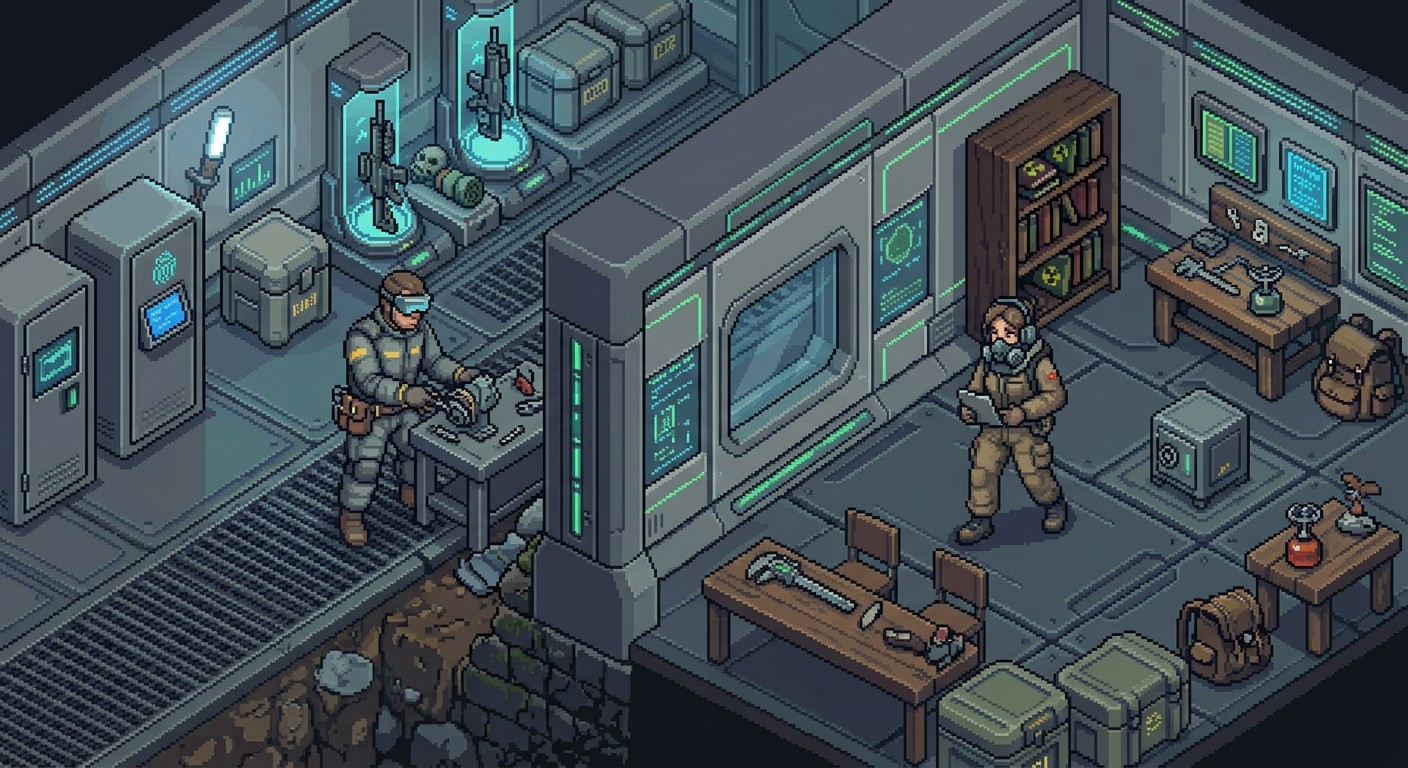
The setup is simple. Two survivors are trapped after a catastrophe. Everyone else got out, but these two didn’t. To escape, they have to work together, but they’re separated. In the first level they’re in different rooms, on opposite sides of a wall, and they cannot see each other at all. They can only talk.
When I first sketched this, it felt almost too limiting. NO shared screen? No pointing at the same thing? But the more I sat with it, the more I realised the separation is the design. If two people can see the same screen, they mostly stop talking, they point, they gesture and they just do it. The moment you take away the shared view, language becomes the only tool they have. They have to describe their world to each other and describe turning what you see into words someone else can act on, is a suprisingly rich, suprisingly human thing to watch.
That’s what I’m actually interested in. Not “can two people press buttons together,” but “what happens when the only bridge between two people is what they say to each other.”
There’s an emotional layer too, and it’s the reason the separation isnt just a mechanic. These two players want to reach each other. The whole arc of the game is about closing the distance, starting completely apart, then glimpsing each other, then finally standing in the same space. the wall between them isnt a gimmick, its the thing the game is about. Getting to the other side together that the story.
I keep coming back to a small design principle I’ve started to trust i.e., constraints don’t limit a game, they define it. Take away the shared screen and you haven’t made a lesser co-op game, you’ve made a different one, where talking matters more than the reflexes, and where two strangers can end a session feeling like they actually connected.
It also quietly setting up the reseach I’m doing underneath everything. If the player can only succed by describing their separate worlds to each other, then everything they understand together had to pass through conversation. Nothing was shared by just looking. That makes what they say to each other not just gameplay. It’s the thing I get to study.
What I learned designing this is the instict to make co-op comfortable same screen, same view is worth resisting. The discomfort of being apart is where the intresting stuff lives.